
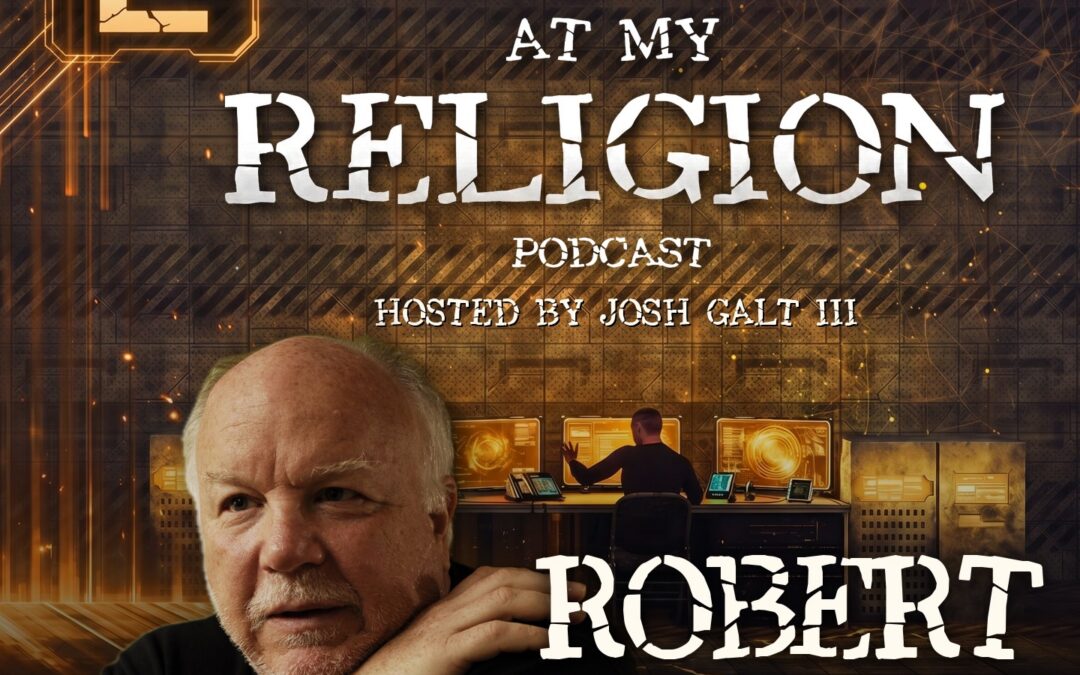
Rev. Dr. Robert K.C. Forman has practiced Transcendental Meditation every day for 57 years. He was a professor of comparative religion at the City University of New York, founded the Journal of Consciousness Studies and The Forge Institute, served as a hospital chaplain, and has written 12 books, most recently Christianity Reimagined: A Mystical Approach for Doubters and the Dubious. Raised Jewish, he never once cried in meditation. Then a friend took him to an Episcopal church, and he wept every Sunday for eight and a half years, without ever believing the doctrine.
Most guests on this show believe and struggle to live it. Robert lives it and doesn’t believe the creed. He and Josh talk about who Jesus was and why his followers called him the only son of God, why spiritual hunger makes people easy marks for charlatans, what the word sin points to, and why most of his Catholic-school students stopped going to church. He explains the three kinds of meditation, and why the enlightenment he reached in his twenties didn’t end his anxiety, his depression, or his mistakes.
Josh admits he’s driven, suspicious of anything easy, and still carrying shame from his Pentecostal upbringing. Robert answers with questions of his own, a motorcycle ride past a sunlit field, and a friend’s test for honesty: if you didn’t edit anything, what would you actually say? He ends with a practice for the next 30 days.
About Robert Forman: Rev. Dr. Robert K.C. Forman is a retired professor of comparative religion at the City University of New York, an interfaith minister, and a former hospital chaplain. He founded The Forge Institute for Spirituality and Social Change and the Journal of Consciousness Studies, and has written 12 books, most recently Christianity Reimagined: A Mystical Approach for Doubters and the Dubious.
Christianity Reimagined: https://christianityreimagined.org
Chapters:
0:00 Intro
0:44 57 years of meditation, then tears in church
4:59 An Episcopal church, without the creed
7:16 Who was Jesus, really?
11:50 Gen Z and a different reading of Jesus
23:55 Church for the infinite, not the community
28:00 Gurus, charlatans, and the Forge Institute
30:41 Why spiritual hunger makes us easy to rip off
34:25 Christianity reimagined, lived as a path
36:39 What the word sin really points to
43:42 Shame, and the Catholic school question
48:38 The three kinds of meditation
53:51 Why so few people keep asking questions
1:03:24 A worship leader’s breakthrough
1:07:34 Radical honesty and plant medicine
1:11:38 Hard practice or easy practice
1:15:03 Enlightenment ain’t what it’s cracked up to be
1:21:18 More than balance: a motorcycle ride
1:28:26 Ambitious and present at once
1:36:55 How to get rid of shame
1:44:34 A practice for the next 30 days
1
00:00:02.000 –> 00:00:05.000
Speaker A: Today’s guest is Robert Foreman.
2
00:00:05.000 –> 00:00:38.000
So I went back to church the following week and cried again. And I cried in church every single Sunday for eight and a half years. And the last Sunday of doing that was. I mean, I could tell you that story, but what I. What I came to realize was that the meditation itself was very powerful and very important in my life, but it didn’t develop my emotional life. It developed all kinds of things. But I, I just. To give you a sense for that, I never once cried in meditation.
3
00:00:38.000 –> 00:00:43.000
Speaker C: You’re listening to the Bad at my Religion podcast, hosted by Josh Gold.
4
00:00:43.000 –> 00:04:23.000
Okay. Yeah. So my name is Robert Foreman. I have been practicing Transcendental Meditation since 19, since 1969. So it’s. I’ve been meditating for 57 years now. Wow. And it has shaped my life in a way that’s well beyond thinking, well beyond thought. And during the course of my 57 years, I’ve had the kind of experience, the kind of spiritual experiences one hopes to have in. In all this. So I’ve had experiences that. That I learned actually seven years after they happened. I’ve had experiences that I’ve come to understand as what they mean by enlightenment. I’ve had experiences of transcendence. I’ve had experiences of my life improving radically. And then about 10 years ago, I got involved with Christianity. A friend of mine took me to a Christian church, and I’d been before, but for some reason this one took off and I found myself weeping in the Christian church. And. And I didn’t understand why. So I went back to church the following week and cried again. And I cried in church every single Sunday for eight and a half years. And the last Sunday of doing that was. I mean, I could tell you that story. But what I, what I came to realize was that the meditation itself was very powerful and very. In my life, but it didn’t develop my emotional life. It developed all kinds of things. But I, I just. To give you a sense for that, I never once cried in meditation. I certainly cried, but I never cried in meditation. And so I found that the gone to Christian church connected me both with emotions and with other people. And that became a kind of touchstone for me. And I’ve continued to go to church, and I’ve continued to develop that. I wouldn’t say I believe in Christianity. I’ve never. I mean, the interesting thing about crying in church has always been that the very first church that I went to, when I cried so much, I never believed the doctrine, not a word. And when I went back and, you know, we would recite these things. I never believed the doctrine. It just. That wasn’t the way my mind worked. And I still can’t say that I believe in Jesus. I believe in God the way he comes out. But I certainly have a very clear sense of being connected with something larger than myself and connected in a visceral or tactile way with that which is larger than me. And that is kind of the touchstone of my life. But where it goes in terms of belief. Belief is about, I believe this sentence, or I believe this doctrine, or I believe that. That. That the infinite is this way or that way. That kind of stuff has never worked for me. And I just. I. But I do find that. That I am deeply committed to this sense of connecting. I’m deeply. Can. I feel deeply connected, and I’m committed to the notion that we can connect to this greater reality. So how’s that for a belief system? I could. I can say I don’t have a belief system with all kinds of beliefs.
5
00:04:23.000 –> 00:05:01.000
That’s very interesting, actually, because it’s. It comes at the premise from a different perspective than anybody else that I’ve talked to so far, because most people either have something that they believe fully, or they did believe something fully, and then they came out of it and they no longer believe any of that. Like they were in a. What they would consider a cult or something. Um, and then yours is very different because you do the actions without believing actually what you’re doing. But your motive is more about the human connection, the personal connection. What kind of church do you attend? What. What
6
00:05:01.000 –> 00:05:02.000
I. I
7
00:05:01.000 –> 00:05:02.000
attend,
8
00:05:02.000 –> 00:07:15.000
I. I attend an Episcopalian church. I actually got baptized. And turns out next week I will be officially, formally invited into the Episcopalian church. Long story, we don’t need to go into that. But, yes, I’ve been. I enjoy the Episcopalian church. I love the ritual. It’s very beautiful. And it’s still meaningful to me. Not the words, but the actions. Kneeling down, holding out your hands and saying, I need some help offering, you know, drinking of the cup that everybody else has drunk from. I serve as an acolyte sometimes, and I. And I offer the cup. And it’s so beautiful to see people come up to the dais or whatever it is they come up to and say, in effect, say, feed me. And there’s something so human, so real about that. Even though people do it kind of unconsciously, and people do it without, you know, without really knowing what they’re doing, I find it very beautiful. There was One time I was in a church, it was a different church than my own. And that church had this ritual where everybody came up and they, everybody had this little tiny candle and, and they put it in some little thing of sand and they came up and, and they all brought their candle and they put it in the sand. And it’s like it said to me, everybody has their pain, everybody has their longing, and we all are sort of in this together. That’s what I find really moving about the Christian church. Not so much the words, the words don’t, don’t work for me. I mean, you know, it’s like I think about who Jesus was and who these people were and what they’re saying, and it has a kind of a distant connection with my experience. And that’s, that’s the way I regard it. I, I think that, I think there’s experiences behind it. In fact, I think experience comes first and doctrine comes well later. But for many Christians, the doctrine is the part that counts. And I, I have no beef with that. It’s just not the way it works for me.
9
00:07:15.000 –> 00:08:21.000
Do you think that Jesus was a real person and that, that he came and did miracles and those things? And do you, like, what is your belief about Christ in, in that sense? Because it seems like over the years things have really been changing. And you, you probably through the 60s and so the hippie movement and psychedelics and all of those things, and then the Jesus movement, that’s, that’s sort of where my parents came out of. They, they took the path. Instead of going the hippie route, they went the Jesus freak route in the 60s and, and 70s. And so you’ve seen all of that. And now today, the younger generation, Gen Z, is especially reconnecting with, you know, writings from 100 years ago and ideas about Jesus being this figure who has been misinterpreted by religion over the centuries. And in reality there’s, there’s a movement now about who Jesus was and what he was actually saying and how we should interpret that. What’s, what’s your view on Jesus?
10
00:08:21.000 –> 00:11:50.000
I’d be interested to know what that movement is all about. It’s not something I followed. I think that Jesus was a deeply spiritually connected fellow. I think, you know, was he enlightened or whatnot? I don’t know. That’s an interesting question. But he was clearly a deeply spiritual man. Did he exist? Yes, I don’t think there’s any question but that he existed. I think he was a deeply spiritual man. But the people around him didn’t know quite what to make of him. And no doubt for the people around him. Imagine you’re in dusty old Israel and you know, you didn’t know of the existence of the Buddha who preceded Jesus, by the way. You didn’t know the existence of the Upanishads. You didn’t know the existence of the Dao for you, for people in dusty Israel. This guy was one of a kind. He was sui generis, and there was nobody like him. And so they look at a guy like that and they say, oh, my goodness, he’s the one and only. He must be the Son of God. And I think what they were seeing was a spiritually connected man and interpreted it as the one and only, interpreted that as he’s the only possible Son of God. And the whole thing develops from what I think was a fairly natural mistake to think he’s the only guy. And I don’t attribute it to Jesus. I attribute it to the people that were following him and looking at him and sort of gaga over what this fellow must have been. He must have been very charismatic. He must have been very beautiful. And so you read his words. It’s hard to know which words were his, but you read his words and. And it’s clear that he’s very sensitive, he’s very compassionate, he’s very wide open, and he’s. Yeah, he’s a wonderful man. So I think. I think the religion has made of him something that he wasn’t. I don’t think anybody is. You know, a fellow like that was the Son of God. Yes, but so too are all the enlightened beings, and I think so too, are all of us in some way or other. So, yes, I think he existed. Yes, I think he was an amazing man. No, I think the religion got him wrong. And that’s a pity, because it made him into something that, you know, he sort of becomes this figure of a hagiography. He becomes this figure of adoration. And I think the adoration belongs on one’s own heart. And I think that adoration belongs on the infinite, not on this particular guy. And I think that that’s. That served the religion poorly because it made the whole religion into. Well, we have it and you don’t. We know Jesus and you don’t. And that’s. That’s a pity. That’s really been damaging to humanity, and it’s been damaging to the religious people, I think. But again, I don’t want to fault people that are religious because I think what they’re sensing is in a fellow like Jesus is really quite beautiful and is, is the spiritual path. So I see a lot of people that are Christians that are on a beautiful spiritual path and take it quite seriously and have moved their lives forward in very real spiritual ways. And in that sense I, I have no fault with Christianity but that this sort of us, them stuff and the fact that Jesus is the only one, I think that that has not served us well.
11
00:11:50.000 –> 00:12:10.000
That’s essentially the, the message of the, the movement that at least as I’m seeing it all across social media and whatnot with, with Gen Z, I mean with, with lots of, lots of people, lots of ages, but especially I’m seeing the younger, younger people embrace exactly pretty much verbatim what you were just talking about.
12
00:12:10.000 –> 00:12:12.000
Seriously. Oh, that’s good to know.
13
00:12:12.000 –> 00:12:13.000
Yeah.
14
00:12:12.000 –> 00:12:15.000
Bravo Gen Z. I’m all for it.
15
00:12:15.000 –> 00:13:07.000
Yeah. It’s, it’s very interesting because it’s. I, I spent a lot of time, as I mentioned, I spent a lot of time in Southeast Asia and Buddhist countries and it’s sad because they’ve also turned that into a religion in many places with similar sorts of results as religion in the west where it’s, it’s used as a means sort of of control, it’s used as a means of, of profit etc. But Buddhism as a philosophy is, is very broad and, and I, for me it’s very beautiful to respect all living things and, and to work not, not to not care so much like the Stoics, but more of, to just embrace the moment and, and to have a, to let go of some of the, you know, the judgment that we hold for, for ourselves, for others, etc.
16
00:13:07.000 –> 00:13:14.000
Yeah, beautiful. I think, I think what you’re, what you’re pointing to. I’m sorry, I cut you off. Finish your thoughts.
17
00:13:14.000 –> 00:13:15.000
No, no, please.
18
00:13:15.000 –> 00:14:01.000
Yeah. What you’re pointing to is that Buddhism has two sides to it. The first side is the one that Buddha comes out with and you read about Hindiana Buddhism and then later on the sort of mental Mahayana Buddhism and that’s, that’s very beautiful stuff and that’s designed to help people move their lives forward. Then there’s what I, what I would call street Buddhism or which is oriented around the Bodhisattvas. And the Bodhisattvas, you know, Kuan Yin is the most famous of them. The Bodhisattvas are the religion of the masses and those people have made these Bodhisattvas into deity figures. There’s just no other word for it. And they live in a pure Land. But other than that, it’s just like the Western notion of God. So, yeah, I think you’re picking up on exactly what I would say is the case.
19
00:14:01.000 –> 00:14:35.000
Yeah. And the idea that Jesus was encouraging people to connect to God directly, that what he was saying in terms of I and my father are one and the things that I do, you can do greater works than these. Like, there was all sorts of admonitions, and if you just slightly view his words and his actions in a little bit different angle, like stepping outside of what the church has sort of encapsulated Christ, as you see, in a very different way, which is sort of what you were expressing.
20
00:14:35.000 –> 00:15:07.000
Josh, I can’t tell you how excited I am about this because A, it means that my thoughts about who Jesus is, I’m not the only one. And B, I’m excited for the Gen Z people because I think that’s a much saner, much healthier way. And yet the interesting thing is you can still be a Christian with that. You can still find community, you can find value in all of this. But it’s, it’s good. You’re giving me good news. I did not expect this.
21
00:15:07.000 –> 00:16:57.000
Yeah, it’s interesting because I, I grew up in a very Pentecostal, very Christian home and everything new age, New Age, everything that was Eastern religion, all of that was very demonized. And so as I’ve gone my own journey after, you know, the last 25 years or so, it’s been really interesting to see that the fear of those viewpoints, even like, like what we’re talking about, like, if my mom were to watch this, she probably won’t, but if she were, she would be like, you’re talking sacrilege. And, and she’s one of those people, like, I’ll just put a caveat here that truly believes and lives her walk. So I, I respect how she lives her Christianity. Like, she truly, truly believes what she believes. And, and she tries to love everyone. She tries to be like Christ. So that’s cool. But there’s also sort of the, the walls of, you know, you’re talking nonsense. How can you say that about Jesus? Like, how can you say that about the universe and these other things? And yet to me, and I think to millions of other people as I’m seeing this, this real groundswell. It’s like, we don’t need to have to go through somebody else to connect to the divine, to connect to God, to have community with one another, and then to have these divisions between churches, because we have one verse that’s different, you know, in, in our belief system. And so it becomes this totally different denominations of Christianity or whatever. It’s like if we are created in the image of God and if we look at what Jesus was saying, love God and love each other, but you have to love yourself as well. You have to go within and you have to find your own personal connection to the divine.
22
00:16:57.000 –> 00:17:09.000
Beautiful. And I would also say that one of the things I discovered and in fact Plug plug, here’s my book called Christian. Can you see it
23
00:17:09.000 –> 00:17:10.000
there again? Yeah,
24
00:17:10.000 –> 00:17:11.000
it’s a little hard to see
25
00:17:11.000 –> 00:17:12.000
Christianity reimagined.
26
00:17:12.000 –> 00:18:29.000
Christianity reimagined. A mystical approach for doubters and the dubious. What I say there is that there’s good evidence to think that the original people, the original Christians, the original people who developed this kind of, this way of thinking had experiences like you’ve had and like I’ve had, had mystical or spiritual experiences. And so that when they look at Jesus they see those spiritual experiences and they frame them in the way that they had so that the doctrine comes out. Kind of whopper jawed but it comes out and it’s really, there is experience at the core of it. And what Jesus had and what many of his followers no doubt had was a sense of the spiritual connection that that’s what they were describing. And the doctrine has that as its basis. So that when I listen to Christianity today, when I listen to the words today, you can kind of hear the experiences coming through. You know, you have to listen with a soft heart, you have to listen openly, but it’s there and it’s, it’s sort of hard to hear but you, but you can hear it. But that’s, I think what, what your friends at this, what’ called the Jesus movement these days,
27
00:18:29.000 –> 00:18:30.000
no,
28
00:18:30.000 –> 00:18:32.000
the Gen Z, what do you, what do you call
29
00:18:32.000 –> 00:18:33.000
it for it? It’s
30
00:18:33.000 –> 00:18:35.000
okay. But anyway
31
00:18:35.000 –> 00:18:50.000
it’s across social media. There’s a lot of, I don’t know that there’s necessarily a framework term which is probably a good thing because there’s so many people coming at it sort of in their own unique ways, but foundationally it’s sort of the same idea.
32
00:18:50.000 –> 00:19:20.000
Yeah, yeah, yeah. And so I think what they’re sensing is that, and so I think that they’re sensing is that there is spiritual life in there. The doctrines are confusing and they get heavy handed and whatnot. But there’s spiritual experience at the back and you know, behind the whole thing. So I think that’s probably what people are sensing and if they’re not I encourage people to look again, but I suspect they’re sensing that that’s really what’s at the core of the thing.
33
00:19:20.000 –> 00:20:14.000
I find it very interesting that you’re at an Episcopalian church and that you, you connected emotionally there. I have very limited experience. My, one of my aunt and uncles when I was a kid, I think they were Episcopalian. So I’ve been a few times. But I would have thought just, you know, making a judgment. If you had said, I go to church because I like the emotional aspect of it and I like connecting with people. I would have thought, oh, you must be in like a megachur church in the US with, you know, a very vivacious worship team. And they, you know, it’s this hour long concert and it’s very emotional and, and you connect with that and connect with people. So it’s, it’s really interesting to me that you’re at an Episcopalian, which to me in my, my recollection is more like the Catholic Church. It’s more reserved and sort of respectful and there’s different actions that they go through. Yeah.
34
00:20:14.000 –> 00:22:37.000
Yeah, okay. In the course of preparing for this book, Christianity reimagined, I went to Catholic churches. I went to a fundamentalist church. The people at the fundamentalist church distinguish between arms, hands up church and hands down church, which I always liked. And the people at the hands up church that I spoke with, and I spoke with, oh, a half a dozen or so there, they were describing a very similar experience to mine. And so it’s, you know, to have to be connected to people to feel like you’ve got a kind of sense of, of security in the middle of the whole thing. That’s what they were getting. I personally didn’t respond well to the, to the Pentecostal church. That wasn’t for me. I’m, you know, it’s like, it’s pretty far away from my background. Not everybody responds to the Episcopalian church the way I have, for sure. But it also may be that I found an Episcopalian church that really worked in my neighborhood. I live in western Massachusetts and we have. There are two Episcopalian churches that I’ve been at. One I was at for five years and the other one I’ve been at for about two years, five years, probably longer than that. Both of them had this similar effect for me and perhaps the reserve worked for me. I don’t know. The Catholic Church didn’t work for me, however, it was way too centered on the priest himself and that just didn’t work for me. But The Catholic, excuse me, the Episcopalian church, it’s ours as a community. And the priest certainly plays a role, but he plays less of a role than the Catholic priest would play. I’ve been to UCC churches, Congregationalist churches, Unitarian churches, Methodist church, and frankly, the. They didn’t have much ritual. And it’s the ritual that works for me. So that, you know, each. To each his own, I suppose. But I do find Episcopalian churches work for me. And other people have also had good experiences, but no doubt it’s not everyone. And you know, you do what’s called church shopping when you’re sort of starting all this.
35
00:22:37.000 –> 00:22:38.000
Right.
36
00:22:38.000 –> 00:23:54.000
And you know, I shopped a little bit and the Piscatavians worked for me. So it’s. The reserve is. That’s not what I feel. I feel a sincere community, a community of. That’s stretching one another to move their lives forward. I feel at the church of a community of people that really do want to help one another and are there for one another. And I think that’s where most churches would, most successful churches would say that. And so, you know, the Pentecostal Church certainly said that. So that’s, you know, that, that’s, that’s been my orientation again, for me, the part that works is the ritual. And the ritual works, frankly, like a good dance works. It’s not the words, it’s the movement, it’s, it’s the expression of action, it’s the walking up to the front, it’s the standing up together, it’s the singing a song together. That’s what works for me. All that stuff is really quite powerful for me. I’ve stopped crying in church quite as often, but I still cry in church every now and again just because there’s something so deeply beautiful about people doing something together, you know,
37
00:23:54.000 –> 00:24:16.000
that’s really interesting because the, the view it seems like that you have of Jesus himself is more of an individual or, or of, of our relationship to God is more of an individual thing, if we interpret what Jesus was saying. Right. But you go to church for the community, which is, which is really, really interesting because. So.
38
00:24:16.000 –> 00:24:18.000
No, no, no, no, no. That’s not.
39
00:24:18.000 –> 00:24:20.000
The community is second. No. Okay.
40
00:24:20.000 –> 00:25:29.000
I, I go to church for the, for the, for the reminder of the infinite. I go to church to state my connection to the infinite. I go to church because it’s there. It’s in the walls. It’s, it’s, it’s in the, it’s in the air. The community helps. The community is sort of, It’s I think of it sometimes as hands holding me. And that’s. That’s beautiful. So I reach for the infinite from within the community. And there’s an energy of the community itself, you know, to come together with other people, to come together sincerely with other people. There’s a kind of. There’s a kind of spiritual energy that happens. Durkheim called that an effervescence. And there’s something. There’s something about being in community that has that. That sort of living. Liveliness to it, you know? So, no, I don’t go to church in order to be in the community, but I think the community helps. But thanks for bringing that up. That’s. That was a very interesting insight.
41
00:25:29.000 –> 00:25:54.000
Did. Did you find that that is part of what’s missing in meditation, or would you not characterize it as anything missing? It simply. It’s another way to connect to the divine. Because in meditation, it’s very. It’s. It’s just you. Right? Or did you meditate in groups? Like, how. How was your meditation practice generally?
42
00:25:54.000 –> 00:27:56.000
Generally, I meditate alone. Certainly these days. I generally meditate alone. We have a. We have a group that meets here in Western Massachusetts. Oh, it probably meets for a while. It’s meeting every month now. It probably meets every other month. It’ll continue, but she’s been quite busy, the person that organizes it. When I started meditation, I started from within a. Started in a community, and the community was very helpful. But it was the meditation that took off for me, not the community. But the community seemed to help. And I have been in places where I meditate in groups. Large groups, small groups. I think that helps. But it’s not the same when you meditate in a group. It’s more like bumper cars. You know, you’re. You’re on your own. There are other people there. You’re happy to have them there. But you’re not doing something together. You’re doing something separately in a group. Whereas in church, you’re actually making the thing happen together. You’re doing it together. You. You. You make the ritual together. You. You know, you do the flowers. Remember I said the Catholic Church is more centered on the priest. In Episcopalian church, it’s a more communal kind of activity, and I appreciate that. You know, we, the laity read the Old Testament and the parts of the New Testament. We do the prayers on behalf of the congregation. We, you know, we. We help organize the movement up to the front. You know, it’s like. It’s a congregation generated. The priest certainly plays his role. But it’s con. You know, it’s both the priests and the congregation, and I appreciate that, but it’s. But the meditation itself was never. Was never. We didn’t make those communities happen. They happen because, you know, you go to a. You go to a meditation and there’s a few people organizing the whole thing, but it doesn’t feel like it’s ours. It feels like you’re meditating alone, but there’s a hundred or a thousand people around you. That’s a very different kind of quality.
43
00:27:56.000 –> 00:27:57.000
Interesting.
44
00:27:57.000 –> 00:27:58.000
Yeah,
45
00:27:57.000 –> 00:28:43.000
yeah. And. And is there. Do you think it’s important to have leadership when it comes to that? Or do. Does that get blown out of proportion? Because that also happens even today, where you have ceremonies or you have meditation type of. Of events, and people sort of set themselves up as a guru to help you reach enlightenment. So this is sort of perhaps. I’m sure people get a lot of good things out of it, but I’m sure there’s others who also just get taken advantage of, and those who are sort of leading this small sect of. Whether it’s meditation or belief or experience, make a lot of money off of it.
46
00:28:43.000 –> 00:28:44.000
Yeah.
47
00:28:44.000 –> 00:28:47.000
View on. On that type of thing.
48
00:28:47.000 –> 00:30:40.000
Yeah, of course. Well, a couple of reflections on that. I have run. I ran something called the Forge Institute for some time, and that brought spiritual teachers and leaders together, and it brought them together for common work. It brought them together to see if we couldn’t help one another, deepen our lives. It was a very beautiful group. I really love that gang. But there’s a couple of things about the spiritual world that you become conscious of when you’re in it for a while, which is there’s no cost to entry. To become an Episcopalian priest, you need to go through school, and it’s a real deal. And it takes money, it takes time, takes work. To become a spiritual teacher, you just hang out your shingle. I’m a spiritual teacher. Who’s to stop you? And so you have people that really have no business being spiritual teachers, putting themselves up. You have charlatans. You have people that are too unconscious of their own drives and their own needs, and they end up screwing people. You know, they end up taking money from people. They end up, you know, with sexual stuff that’s going on with the. With the. With their congregants. And that’s a pity, because it’s. Spirituality is, I think, one of one of the greatest gifts to humanity. And so to sort of screw it up like that by. By mishandling your Your, your wards, if you will, the people that you’re teaching. It’s really a great loss to both those people and also to. To the world at large because people think, oh, spirituality, they’re just going to screw you over. And God knows I’ve seen a lot of those. God knows I’ve seen, you know, too many people be hurt by this, both financially and sexually and emotionally. Yeah, it’s been, it’s. It’s tragic, but it is what it is. It’s another human adventure.
49
00:30:40.000 –> 00:32:05.000
Yeah. So the, the challenge of spirituality, it just seems like it’s so important for us as humans and as a part of our human journey, and yet there are so many pitfalls and so many dangerous things that could happen and so many errors and, and so much division that happens because of, like, I’ve traveled a lot and 99 of the people on the planet, in my opinion. Maybe that’s an exaggeration, but it just seems like almost everybody kind of wants the same thing, no matter what country, what religion, what system they. They’re born into. Like, people just want Maslow’s hierarchy of needs. Right. You want to have. Do something that you enjoy. You want to have time with your family and friends. Like, you want to have a roof over your head and food on your table. It’s like people are not born with this innate desire to have conflict because of politics or religion or any of these things. And yet where you’re born makes a massive difference. Right. If someone’s born in Latin America, they’re not going to be Muslim, probably, they’re going to be Catholic, someone’s born in the Middle east, they’re going to be Muslim, etc. And. And yet there becomes this thing where it’s like, you’re not supposed to talk about religion or politics, which, forget the politics, but the religion side is like, existential to our beings.
50
00:32:05.000 –> 00:34:25.000
And that’s why there are so many charlatans, because we’re so hungry for this. And it’s in the human. You know, it’s in the human situation. They were all born with wounds. We all come of age with hurts. We all come of age needing something. And so spirituality comes up as a way to both say to people, we can save you, but it also comes up as a way to actually move people’s lives forward. And the people that move their lives forward are the lucky ones, the people that see the spiritual path and take on the spiritual path as an actual path where they see, I can be more honest, I can be more open, I can be More connected here. That’s where the spiritual path really works. But too often the spiritual path is, oh, we’ll give it to you by and by, oh, we’ll. We’ll help you out down the road. And that, that attitude, it’s. It’s. If that’s the best that people can see, they’ll go for that, you know, that. That people are so hungry. Solve my problem. I mean, you think about now, here I come back to my Episcopalian image. You know, people come up to the front of the church and they come up like this, and it’s like, help, please help. And that’s what makes people so liable to be ripped off, you know, that we all have needs. And it’s. It’s such a sincere thing, you know, I’m in pain. Help me with my pain. I’m in. I’m wounded. Help me with my wound. And, you know, it’s like it just, you know, you just. I watch. I watch these people and I go, oh, it’s so beautiful. We’re all in this. We’re all in this thing together. We just all are hungry for whatever it is our wound is, you know, whatever it is that will heal us. And our wounds are a little different one from another. All of us feel a little lonely. All of us feel like we’re not quite loved. All of us feel like we wish we had more money. All of us, you know, it’s like, so the wounds are not. There’s not that many different longings, but the longings are real. And, you know,
51
00:34:25.000 –> 00:34:48.000
and after 50 plus years of meditation in, in your book Christianity Reimagined, how do you approach this? How do you imagine or reimagine what Christianity to give it a term that people understand all over the world what that looks like and how that is lived and practiced?
52
00:34:48.000 –> 00:36:48.000
It looks like people asking themselves, am I being really honest here? It looks like people asking themselves, can I go deeper? It looks like people touching into the infinite and sensing something greater. It looks like people taking on. What do they call it? Christian. There’s a Christian meditation practice by Thomas Keating. What do they call it? Contemplative prayer. They call it somebody taking on contemplative prayer or doing a practice. There’s Christians that do yoga. There’s Christians that do meditation. It’s. It’s. Take it up, you know, take up your. Take up your path and. And practice it and do it and read the material as if it’s talking to you not far away and not talking about Jesus, but read the material as if it’s talking to you. When I read about who Jesus was or what people say Jesus was, I think to myself, they’re describing me. Okay, am I living up to that? Am I really being compassionate? Am I really being honest? Am I really being wide open? It’s taking up the whole thing as a challenge, as a path. And I think, frankly, I think the Christian path, I’m not that enamored with the path as it stands. I think my meditation practice has been very effective. I think the Christian path can be pretty effective, but it is a path and it moves one forward. And I think that’s the part that counts. And if somebody takes it up and says, oh, maybe meditation will help here, maybe the Christian contemplation will help, maybe being more open with my neighbor will help. I think all of that, everything, every single step we take is a step towards wide openness, is a step towards connecting with the infinite. So it’s. In that sense, I think the Christian path is the right path. It’s a good path.
53
00:36:48.000 –> 00:37:10.000
Do you think that it brings baggage, though, because of the, the name Christianity, because of the connection and as opposed to something like the Buddhist path, when, when you talk about Christianity with a Westerner, perhaps more, more for people who are in Western countries, we can say Europe, us.
54
00:37:10.000 –> 00:37:11.000
Yeah, yeah.
55
00:37:11.000 –> 00:37:33.000
Maybe even Catholic countries. There’s, there’s an idea of what that means, of what Christianity is. And I think for most Christians, you, you have to have the foundation of, I am a sinner. And my only path to heaven, my only path in the next life to eternal life is through Jesus Christ by accepting him as my savior, that he died for my. So
56
00:37:33.000 –> 00:37:35.000
your parents, your parents inculcated you a
57
00:37:35.000 –> 00:37:36.000
little Christianity, Your
58
00:37:36.000 –> 00:37:41.000
parents inculcated you a bit much?
59
00:37:41.000 –> 00:37:46.000
Well, that’s, I’m just quoting what, what Christianity, what Christians believe, right? I mean,
60
00:37:46.000 –> 00:39:30.000
not, not every Christian would say, yeah, but when I hear the word sin, when I hear the word sin, I think sin in the sense of, you know, I’ve, I’ve had a bad thought, I’ve had an affair, I’ve, I’ve masturbated, I have cursed, you know, the sort of Catholic version of sin that’s, that doesn’t, that doesn’t do much for me. You know, there’s nothing wrong with masturbating. There’s nothing wrong with cursing. But where I am a sinner, sinner is, you know, I’m screwed up. I have, I have done harm to people. I have, I’ve messed up my relationships. I have been way too Anxious about certain things. I have been stuck in my own narcissism. I have been stuck in lots of ways. So I think to myself, am I a sinner in that sense? Yes, absolutely. And I have lots to improve, you know, will God save it? No, nobody can save it but me. But I can have the support of knowing that it’s possible to save myself. I can have the support of knowing that there are other people that are also struggling there. I can have the support of knowing, you know, the words of Jesus helps. You know, it’s like, love your neighbor. Wow, can I actually love my neighbor? What a great instruction. You know, so I, I hear this, but I don’t hear the kind of heavy handedness that comes with, well, the Catholic Church anyway. I don’t know quite what you were taught as a kid. You know, the, the way you talk about it, that’s, that, that’s very loaded. And fortunately for me, I didn’t have that load, so I didn’t have to undo that before I got to do my other stuff.
61
00:39:30.000 –> 00:41:14.000
Yes, coming out of that, it is very loaded. Like the, you know, that denominator that, that part of, let’s say Protestant Christianity comes with, you’re born into original sin, you, you are born a sinner, you need to be cleansed by the blood of Christ. Etc. It’s interesting because of, of how you’re saying this. My wife is Catholic and we, we talked for a very long time about like how this is going to work because I’m very much not Catholic and I, I’m very much not religious. Like, I don’t think that we need religion to get to connect with God, connect with the divine, et cetera. But I really, I, I saw her heart, that she is seeking truth. And I believe that God’s big enough to meet anybody wherever they are if they were genuinely seeking to connect with the divine. And so for me it’s fine that she’s Catholic, but I have learned through being around so many Catholics now and, and just learning how Catholics believe there is a massive difference between how Catholics view sin and how Protestants view sin. And so the way that I grew up, the way that, that you’re seeing me describe it, is not at all, at least in Latin America, it’s not at all how Catholics look at it. They don’t look at us as being born into original sin, as these horrible creatures that have to be cleansed and purified. And so that for me was really eye opening because I thought that all Christians believe that and it’s not and so there is even. Even within different flavors of Christianity, a dramatic difference in belief in terms of what sin is and what is needed for atonement or forgiveness, etc.
62
00:41:14.000 –> 00:43:19.000
And the way I. The way I think about it is even more. Oh, how can I put it? I suppose liberal is the right word, but I regard it as. The word sin is actually describing something. I mean, you think about the fact that this was developed by people 2000 years ago and the language they had. You know, it’s like sin is like, oh, you’ve done something wrong. And they, you know, it was shaped by the Old Testament way of thinking about things, of you’re going against the Commandments. And so that’s the way they conceived of being wrong. But if you think about it, what was. What were they really pointing to? They were pointing to the fact that the way somebody addresses their life and addresses one another was not working, that people were ending up unhappy and screwed up and. And, you know, like, creating their own hells and, you know, goodness. And so that the word sin is about this process that all of us do. You know, we all commit this kind of stuff. We all mess up our lives. We all make mistakes. We all are running away from who we are. It’s like we’re all in the same boat. And whether you talk about it, I find the talk about it as sin is very distracting and not helpful. But if people want to talk about a sin, that’s fine. But for me, I see it as human situation. We’re all stuck. We’re all incomplete, we’re all in pain. And that’s where I go, yeah, we’re all going up to that altar and holding out our hands, you know, so that it’s. It’s. I think. I think for you to say, you know, the Catholics, that’s not the way you think about things. I think that’s healthy, that you’re saying to yourself, there’s something in there that you kind of recognize intuitively. There’s something in there that’s very beautiful about what your wife is up to. And it might not be your language for it. And I think that’s. That’s a wise choice of yours to be able to look past your own language and look past your own framework. And I think we all need to do that. Okay, I’m done.
63
00:43:19.000 –> 00:43:22.000
But the. The thing that I come back to with.
64
00:43:22.000 –> 00:43:23.000
Hang on one second,
65
00:43:22.000 –> 00:43:23.000
Josh.
66
00:43:23.000 –> 00:43:39.000
Hang on one second. I want you to know you’re very good at this, and you’re doing a really good job. Your questions are appropriate. Your questions are deep thinking and I really value this conversation and what you’re about. Okay, back to work.
67
00:43:39.000 –> 00:44:09.000
Thank you. I appreciate that. Okay, so coming back to sin, when I look at sin, one of the reasons why I have been so hyper aware of the difference in how Catholics, at least in my wife’s family, look at sin versus how I grew up with this, you know, this cudgel of sin is because of shame. So I wanted to ask you about shame and guilt and those types of feelings because the church uses shame as a means of control, in my opinion.
68
00:44:09.000 –> 00:44:11.000
Yes, it does.
69
00:44:11.000 –> 00:45:01.000
And I think that shame is a very low, low energy. Like it’s very negative. It’s not something that is positive and moving us forward towards heal and growth. That’s my view of it. How do you view shame and guilt and those things in connection to Christianity Reimagined? Because it’s at the core for me of, of Christendom that I’ve had to sort of stop being so judgmental and just forgive, right. And let it go. But when you’re an empathic person, when you’re a sensitive person and you grow up in that you, you internalize so much stuff that is not positive about your own self and about your inadequacy to reach God. And it, in a lot of ways, I just don’t think it’s very healthy.
70
00:45:01.000 –> 00:47:40.000
It just to hear you say this, man, it breaks my heart because shame has been obviously difficult for you and it tears people apart both inside. You know, it’s like, I’m not good enough. And this, the, the sort of heavy handedness of, you know, you’re born into sin or you’re born, you know, you’re, you should be ashamed of what you are. It’s like, wow, you know, it’s. I grew up, you know, as I grew up, my, my parents played the shame card a fair amount. Oh, you should be ashamed of yourself. You shouldn’t be doing that. And that’s, that’s something that it took me many years to sort of slough off, you know, that I’m actually okay. I might not be, I’m not perfect, but I’m actually an okay kind of person. And to be able to say that to oneself, it. That took a long time to be able to say that to myself. And my parents didn’t play the shame card as part of their religious life. You know, it was just like, you know, you’re not being a good enough guy, you’re not doing well enough, you know, you know, your grades are not good enough. That was the kind of crap I got. But, you know, to be. To say that you’re sort of built. That shame is built into who you are, you should be ashamed. It’s like, what a. What a travesty to. To lay that on some kid. And it’s. I’ll tell you something interesting, and I’m. I’m not. I’m not being insulting here of your wife, I hope, but when I was teaching college, I used. I had a class where at some point during the course of the semester, and I would. I would tend to have a class of 40 to 50 students, typically. And at some point, I’d say to the students, okay, how many people here grew up in a Catholic. In a Catholic church. Church. And, you know, hands would go up. And how many people here went to Catholic school? Now, this was Hunter College, and we had a lot of Catholics in the school. I would say, yeah, two thirds of the hands would go up. And then I would say, how many of you still go to church? All the hands would come down. There’d be virtually no hands left. And my feeling was, whatever they’re doing in those Catholic schools, it ain’t working. You know, And I think part of the reason it ain’t working was. Or is that there’s. That they’re loading this shame onto people. They’re loading this. This awful self image onto people and how it’s a travesty that they do that. And. And so, yeah, I think that. I think shame is really not helpful. Shame has never played much of a role in me in my religious life. So I didn’t go into the church thinking, well, I’m ashamed of myself, so maybe the church will help. That just wasn’t part of my lexicon. So I’m sorry, I can’t help you on that one. You’ll have to. You’ll have to unshame yourself.
71
00:47:40.000 –> 00:47:54.000
No, but that’s wonderful because you don’t have that baggage, you don’t have that connection. And so you are more free to. To explore in your faith, in the church, and your connection and all of it.
72
00:47:54.000 –> 00:48:38.000
Yeah, And I came into the church, if you recall. I came into the church with 50 years of meditation under my belt. And so I came. You know, it’s like, I know what. I know what I’m about. I know what I’m about. I know what my spiritual life is all about. I’ve had a good bit of experience on it. So that for me to see the beauty of the church, I wasn’t having to sort of, you know, mostly when you go to a church, you have to go, you know, sort of like swim through all this stuff. There wasn’t a whole lot of stuff I had to swim through. It was like, oh, these are people sincerely trying to work together to develop their spiritual lives and their lives. How beautiful is that? So for me, it was, it was, it was easier to be able to see the value of the thing. And I still, I still see the value of the thing.
73
00:48:38.000 –> 00:49:23.000
Can you talk a little bit about meditation? It’s something that I’ve, I’ve done a little bit. I’m very, very like Meditation 101, like level. But there’s different, at least from my understanding. There’s, there’s sort of the meditation where, like you said, contemplative prayer. So you’re, you’re meditating with a focus on something. And then there’s other types of meditation where it’s a turn off your brain and think about nothing sort of meditation. Where do you land? And in 50 plus years of experience, obviously you have experienced it all, I’m sure, and you have a, an insight that you could share about the healthiest, most strengthening types of meditation that people could do.
74
00:49:23.000 –> 00:53:13.000
Yeah, yeah, yeah, I could, I could, I could give you that. But it would be, it would be from the vantage point of my form of meditation. Everybody that practices meditation thinks their own form of meditation is the best understanding. That with that is caveat. It seems to me that there are, there are three forms of meditation. One is that you have a focus of your mind. Often a focus of your mind is kind of cognitive, generally cognitive. So that the Buddhist practice, the. What do they call themselves? John Cabot Sin stuff. They call themselves, oh, mindfulness meditation, the practice of mindful meditation. You know, you, you pick up something, you follow your breath and you follow your thoughts. You find, you say, now I’m thinking, thinking, thinking. Now I’m thinking about blah, blah, blah, blah, blah, blah. Now I’m feeling, blah, blah, blah. And you name it and to name it, you’re sort of, to some extent, you’re trying to hold yourself apart from it, or not trying to. But as you, as you watch the thoughts go by, you, you become a little more distant from your own thoughts. And in that sense you sort of find a level of peace. So that’s one form of meditation. I call that contemplation. Concentration is, I think what you’re pointing to. Zen Buddhism I think of is, tends to be content concentration, which is like, you know, you, you pay attention, you Bring your attention. You’re sort of trying to focus your mind. I’m going to focus my mind. I’m going on this and some forms of mantra meditation like that, like the chanting of Om. I’m going to chant Om and I’m going to keep my mind on that. I’m not going to let my mind wander. That’s another. So that’s concentration. So you’ve got contemplation, where you’re allowing yourself to follow your thoughts and you have concentration, which is you’re trying to hold your mind in one place. And both of them are trying to get the mind kind of quiescent, quiet. Transcendental Meditation is a third form. And there are probably other forms. I’ve heard of other practices that do something quite similar, and which is. We have. We use a mantra which is a sound whose meaning is not known. It’s just a sound. And our instructions are to pick up the mantra effortlessly and not to focus on it. Hard not to concentrate on it, to allow your mind to go where it will. And as your mind starts to go where it will, you find. I find we find that your mind tends to quiet down because the quieter places of your mind are quite pleasant. So that pleasantness, the sort of attractiveness or what, what Hinduism calls ananda, the practice, the. The mind tends to go towards these more pleasant, loving, joyous, blissful levels of life. And so that we allow the mind to go where it will. We’re not trying to concentrate, we’re not trying to follow the thoughts. We just allow the mind to kind of settle down in itself, its way. All three have value. All three are interesting in their way. TM worked for me. Transcendental Meditation worked for me from the very first meditation. The other practices did not work for me. I’ve tried pretty much everything over the years, and this is my path. But it’s, it’s, you know, there are different paths for different people. But I can recommend mine for, you know, because it works for me. And I’ve seen it. I’ve seen it work for other people, not everybody. I am a teacher of meditation, so I’ve probably taught 500 people over the course of the years and probably 10% have continued past a year. So that gives you a sense for. It’s not a path that works for everybody, but it certainly worked for some and works for me. So I taught about 500 people over the years and probably 10%, 15% tops, kept going after a year. So. And I think
75
00:53:13.000 –> 00:53:18.000
that’s.
76
00:53:18.000 –> 00:53:50.000
That’s a deeper question. Than I quite know how to answer. This is life stuff, you know, this is, are you ready to move your life forward? Do. Are you willing to commit the time when you’re busy? Are you willing to say to yourself, I’m not perfect and I’m not, I’m not finished and I’ve got work to do? These are, these are deep questions. And so many people are not in that boat, you know, Many people are not ready.
77
00:53:50.000 –> 00:54:54.000
That, that is one thing that challenges me about my fellow humans is the lack of questioning. And I’ve, I’ve, as I’ve grown, I’ve, I’ve become much less judgmental than I was when I was younger. So that’s, I guess that’s growth in me, but I still don’t understand it. I, I question everything. I always have. I always ask why. I want to know the why of everything. And it frustrates me less now, but that people are just content to accept whatever they’re taught from wherever it comes and sort of just float through life without questioning the deeper things. And I understand that everyone’s wired differently. You know, there’s the, the Jungian or Myers Briggs personality types, there’s different brain types, all that. I get that. But it’s still, it seems like for every human, we, we should seek to have some introspection and some questioning of deeper purpose. Why are we here? What is this life actually about?
78
00:54:54.000 –> 00:55:27.000
I certainly agree. Let me give you, Let me tell you a little story, though. When I’ve been running spiritual groups, and I have over the years, I often have been told, oh, I was one of those people that asked all the wrong questions. When I was a kid. I was in the church and I was asking questions and I kept asking questions and finally the teacher kicked me out of the class. I can’t tell you how many kids told me that. Kids, people told me
79
00:55:27.000 –> 00:55:28.000
that,
80
00:55:27.000 –> 00:57:05.000
you know, and you think about those classrooms, most of the kids in that class were happy sitting there being told what to think and how to think and whatnot. And it is so much more comfortable. It is so much easier to accept and not to not struggle. And you have to be, you have to. I want to. I, I, I will put it in a way that’s both sides. You have to be a little crazy to keep asking questions because it’s harder. And you don’t, you know, you’re not, you’re not in a safe place all the time. So you have to be, on the one hand, you have to be a little crazy, and on the other hand, you have to be committed to your spiritual life. And not everybody is. People are more than content to just sort of go along. You know, you get along. What’s the phrase? You go along to get along. Most of the people in the world are going along, getting along. And there’s a lot to be said for that. You know, it’s like they earn a living and they raise their children and never, you know, never give it a thought. And I was, you know, when I was a hospital chaplain, I would see people, typically in an afternoon, I’d see eight, ten people. Nine of them, that is to say, nine tenths of them, you know, would give me, you know, I’d go into the class, I’d go into the hospital room, and I’d say, you know, how you holding up? Oh, fine. Most of them would be, oh, fine. And, you know, it’s like I would want to say to them, you know, like, no, really, how you doing? Oh, no, no, I’m fine. I’m fine. I’m fine. My wife came just today, and it’s. It’s not thoughtful and. Okay. People on
81
00:57:05.000 –> 00:57:06.000
their deathbeds.
82
00:57:05.000 –> 00:58:34.000
Yeah, it’s not. They’re not sort of looking at it. Was it Aristotle? I think. Oh, no. Socrates was the one that said, the unexamined life is not worth living. And think how rare that is that people say to themselves, the unexamined life is not worth living. It’s such. You’re challenging your very belief system. You’re challenging the. The. The. The conditions on which your life is based. And so for people to say, God damn it, I’m going to keep going, that’s a huge undertaking. It’s a huge challenge. And it takes. Now, here, I might be complimenting myself, but it takes an enormous amount of courage to do that, to keep at it and to keep saying, you know, where. I’m really up. Oh, my God, look what I’m doing to my wife, you know, or, you know, where I’m really screwed up. I’m. I’m doing this to myself. I’m doing this to my. My kids, or I’m relating to people as if they’re. It’s. As opposed to human beings. It’s, you know, think how hard that is for people to really take that on. So is it. Is it painful to see that people don’t take it on? Yeah. You know, does it break my heart to see people kind of living? Yes, Dog, you know? Yes, Father. Yeah. I want to say, dang, man, you know, you’re missing your life, but I can Say that till hell freezes over. And most people can’t hear it.
83
00:58:34.000 –> 01:00:11.000
Yeah. Because for most people they’re content with that. And it’s, it’s one of those things that I’ve, I’ve sort of come to the acceptance of. I’m not going to understand and I don’t really want to understand like that perspective. All I can really do is my own growth, my own exploration, my own questioning. And I need to drop the judgment on other people, which obviously I haven’t dropped because I still do judge. Like, why doesn’t everyone do this? But, but also then that becomes sort of a thing with ego maybe. And me is like, well, and that I, that I don’t want to get into. It’s like, oh well, I’m more spiritual. Right. Like there’s, there’s a guy that does memes on social media like, called super spiritual. Actually now that I think there’s a few people, comedians and so everything is, you know, they take it to the extreme and it’s, it’s hilarious because I think that those who, who are a little bit more spiritual or seeking like, see the humor in it, in ourselves. Like, oh yeah, that I’ve, I’ve judged people in that same way. Right. Because it’s, even though it’s so exaggerated, we can tend to fall into that trap of. I don’t know if it’s ego. Like, I don’t, I don’t have. I, I think that ego is important. I think the self is important, but on certain level. But also it can be sort of a, a pride and arrogance thing which like you were saying then, that causes us to treat other people in a way that perhaps is, is sin in the sense of, well, that’s not how God looks at those people.
84
01:00:11.000 –> 01:00:12.000
Yeah. I think
85
01:00:12.000 –> 01:00:14.000
we are all fellow humans.
86
01:00:14.000 –> 01:00:24.000
I, I think you’re really onto it, Josh. I think what you’re saying is that as you look at your own, how to put this nicely? As you look at your own.
87
01:00:24.000 –> 01:00:25.000
Don’t put it nicely.
88
01:00:25.000 –> 01:02:41.000
Fine. As you, as you look at your own fuck ups, you know what you’re seeing is that you’re in there, you’re playing a role, you’re doing something that’s, that’s standing in the way. Whereas I look at people now, I used to, I used to be in the same boat. I used to do the same thing. That’s, I can speak out of, out of real knowledge here. You know, I, I used to look at people say, oh, what’s wrong with them? They can’t, they can’t move their lives forward at this point. I just, I feel such compassion for folks. You know, it’s like, it’s scary to, to move your life forward. It’s scary to give up your framework. It’s scary to give up your comfort, comfortable home. And so I see, I see people, yeah, afraid to take it on. And as opposed to saying what’s wrong with them, I say to myself, yeah, there’s a reason they can’t take it on right now. That’s, that’s, it’s, it’s difficult. Think of all the challenge that you’ve taken on. Think of all the stuff that you’ve thrown over. Think of all this. I mean, you look what you’ve done with your folks. You know, you grow up in this, in this fundamentalist Christian world, and there’s a way to think about things. And I can guarantee you, even though you haven’t told me this, I can guarantee you that as you came out of that, that was painful. You were losing something of your own, something of your life. And people are scared to lose that stuff. I’ve seen it over and over again. This is, this is painful stuff to break through your firm beliefs. You know, I had a. I had a student once, this. When I was first teaching, first, first semester of teaching, and I was saying something, I was teaching something about Christianity. And I forget what. Oh, I think I said something like, you know, scholars think that, that Jesus was probably born in 4 BC and she came up to me in class afterwards in tears, literally in tears. It’s like my priest said he was born then on Christmas Day. And, you know, I’m. And basically she was crying because she was losing her firm beliefs. And that’s difficult. It’s painful. And so I, I think about people that are not taking on the challenge of looking at themselves. It’s hard stuff. And so, yeah, for most people, can’t, you know, most people don’t want to do it, can’t do it, whatever.
89
01:02:41.000 –> 01:03:13.000
I’ve read stuff most more about politics, but about the belief system and how when people have deeply ingrained or deeply held belief, it’s physiologically painful. Like it actually physically hurts the body to set those beliefs aside. And the cognitive dissonance that comes when they start to see truth or to, to unwind that, that, you know, the, the belief system that has them all wrapped up and look at things from a different perspective. It’s physically painful.
90
01:03:13.000 –> 01:03:18.000
I’d love you to send me that article. I’d love to see it. But, yeah, I think it’s absolutely right. I
91
01:03:18.000 –> 01:03:19.000
think I had it bookmarked. Yeah,
92
01:03:19.000 –> 01:03:20.000
if you could find it, that’d be great.
93
01:03:20.000 –> 01:03:21.000
Yeah,
94
01:03:21.000 –> 01:03:22.000
thanks on that. But,
95
01:03:22.000 –> 01:03:47.000
yeah, so I was. I was saying I. I hated school, but I love to read. And so for me, reading and wanting to be more. More critical, thinking more. More questioning, because just naturally, I’m more of an artist, more of an emotional person. So as I grew up, I was. I was that way both in sports and. And with art and whatnot. But in. In college, I was part of a church plant, same denomination, like Pentecostal. And I was. The word
96
01:03:47.000 –> 01:03:49.000
is plant or plan
97
01:03:49.000 –> 01:07:33.000
plant. Like. Like you plant a plant a church, so planting a seed sort of thing. And so I was on the worship team, and then I was a worship leader. And as I went through those few years, I realized that what I was doing because I had a. It was kind of funny because I had a problem with. At that time, it was like the. The late 90s, early 2000s, and contemporary Christian music was all the rage in America, right? All the Christian bands that were out there, it was like. I mean, was on the COVID of Time magazine, that kind of stuff. I had a problem with them making money off of selling Jesus. I really had a genuine problem with those artists. Like, to me, it was, go be a rock star if you want to be a rock star, but don’t go and sing about Jesus. Go worship and charge people tons of money and get rich off of that. So this was my. My working through this because I was a worship leader and I thought it should be given freely. And then I began to realize I’m manipulating people in the same way that a rock star does. Like, in the same way that Bono and you, too, take people to the absolute heights, and then they bring it back down and they take them up again and up and down and up and down. Like, we’re doing the same thing here in church with. With our worship music, right? Like, and then when the pastor comes on at the end and you’re playing just the piano behind, and it’s like, it’s beautiful and it’s emotional and it really makes moves people. Truly, everyone’s like, oh, the spirit was really moving here today. I was like, yes, but. But we kind of planned that also. Like, we. We manipulated that. So where are we truly just vessels for the Holy Spirit, or are we doing that ourselves? And that just. That was sort of where I. I kind of just went off the religious path because I was like, I don’t know about all this, and. And I’m not allowed to question, and I have a problem with that. And then I just kept reading and reading, reading, and then I found Ayn Rand and Objectivism and that sort of. Then I went way the other way as far as, like, agnostic theists. Like, I’m like, I don’t even know if there’s a God. But through meditation, through plant medicine, I came back and, and had a lot of things healed in me. So this, this connects. I’ll. I’ll let you talk, but this connects to what you were saying of the painfulness, because I had to go through that journey. It was painful, and yet there is such immense freedom and healing. If you really say, you know what? I am willing to do whatever it takes, whatever, because I want to understand. I want to connect with the divine. I’m not rejecting religion because I’m not looking to connect with the divine with other people. I’m rejecting it because I don’t think that it’s the real way to connect with the divine and to connect with my fellow human beings. And that was sort of the process. And I’d be curious on, on your take with, with plant medicine and meditation, because I, I both with just plant medicine ceremonies and with, using, for example, using my mushrooms in meditation, like the, the Joe Dispensa. I went through that for a couple years, the Joe Dispensa type of. Of meditations, and that was. I. I got something out of it, but I’ve always really struggled with meditation. That, that has been something where it’s like, for me, and then maybe this is a bad thing. And, and I have questioned and, like, how can I continue to do the work? Because I don’t want to be doing something just because, like, I get something out of it, but then I don’t integrate it. Right. Because if you do plant medicine, like, you want to integrate it, and the integration is the hardest part because you’ve got to bring that back and, and actually live, you know, what you, what you learned or what you saw. I. I’d be curious your. Your perspective.
98
01:07:33.000 –> 01:07:34.000
Okay.
99
01:07:33.000 –> 01:07:36.000
I’m sure you run into it.
100
01:07:36.000 –> 01:09:01.000
Okay. First of all, I want to go back a notch and talk about your sort of pulling away from your Christian church planting experience. And that is. That was a. A moment of real. That sounds like a real breakthrough moment. And think about the courage that it took for you to say that. You could have just said, oh, we’re doing it, but, yeah, that’s just the way we do it. You know, you could, you could have ducked, but you didn’t. You were willing to say, there’s something off here. And I can feel it, even if I can’t articulate it. And I think that’s. That’s what it takes. I think the critical matter in growing spiritually is being able to tell the truth. And what I mean by that is not, oh, you tell the truth. You know, you. You know, you tell the truth, but you tell the real truth to yourself. You say to yourself, there’s something off here. And I don’t know what it is yet, but I know that this is not. There’s something not quite right. And being willing to live with that fact that you’re saying, this is not quite true yet or this is not quite real. I have a friend who used to say to me, when I was kind of struggling with something, he said. He said, okay, now, if you don’t edit, if you’re not editing anything about what you’re saying, what would you actually say here? And you say,
101
01:09:01.000 –> 01:09:02.000
radical honesty.
102
01:09:02.000 –> 01:10:48.000
Radical honesty. You just. You don’t edit. And it’s like. It’s an amazing tool. You just say, okay, this is what’s really real. And it’s. It’s gorgeous that way. It’s very powerful. And that’s what you were willing to do. You were telling yourself the real truth. Okay, that was the first thing. And I think that’s, for me, that’s the more important thing. The plant medicine. Again, what I said before was everybody has their own path, and some paths work for some people, and some paths work for other people. I think the thing about plant medicine, I certainly respect some of the folks that I know that are big in that. But the thing about plant medicine for me, is that when the plant has really worn off, can you really hold. Can you persist in that same sense, the nice thing about meditation, the way I experience it, is, you know, when I have a spiritual breakthrough in meditation or when I’m. I often go on retreats, solo retreats, and they’re very powerful for me. So I go off on a retreat and I have some transformation or something that I begin to see in a new way. When I leave, when I go home, it stays with me. That’s the point. It’s not just something. It’s not just a nice experience. It’s like, oh, how do I integrate this sucker? You know, it’s like, how do I. How do I bring this to life? And that’s. That’s been my work. So for me, that makes me wary about plant medicine. But again, I also recognize I’ve got some folks who do plant medicine. I have some folks in the ayahuasca path, and I really respect them, and that’s. That’s work for them. But that’s the one thing about. About where. Where I get wary. I’m thinking of one person in particular who talks about plant medicine, and I wonder, has it really affected that person? I just. That. That’s. That’s. That’s my concern there. But.
103
01:10:48.000 –> 01:11:03.000
And it is. It’s absolutely there. There is something to that. The risk of going and doing it, whether it’s ayahuasca, whether. Whether it’s ebo gain, peyote, the toad, mushrooms, whatever.
104
01:11:03.000 –> 01:11:04.000
Yeah.
105
01:11:03.000 –> 01:11:07.000
That. It’s. It’s almost an entertainment sort of thing. It’s like,
106
01:11:07.000 –> 01:11:08.000
yeah,
107
01:11:08.000 –> 01:11:09.000
tourism.
108
01:11:09.000 –> 01:11:12.000
Yeah.
109
01:11:12.000 –> 01:12:25.000
Is dangerous, and. And people need to question themselves on that. And it’s. It’s something that I consistently question myself too, because, like, I want to go back and it’s like, you know, do I really need to. Have I integrated what I learned last time? Because if not, then I need to continue with that, because what else. What am I going to do other than get my butt kicked? Because I haven’t integrated what I learned last time. I need to. And. And I think that is important. The thing I struggle with, with just plain meditation. I say plain in the sense of there’s no external or there’s no. Yeah, you’re not taking anything with it. Right. Where I struggle is consistency. How. How can one be more consistent and not to. To be flippant of like. Well, just do it. Like, you go to the gym every day, right, because you want to, you know, stay in shape. And for me, the meditation is so much deeper than just going to the gym. Like, that’s a physical thing. As an athlete, you know, it’s. For me, going to the gym is very easy. Meditation is challenging, and it’s. It’s difficult to be consistent with it. And yet when I am consistent, the more consistent that I am, the more I feel like I’m starting to get things out of it and. And go deeper. But it’s a challenge.
110
01:12:25.000 –> 01:13:47.000
Well, I want you to know that for me, meditation is easy. I do meditation every day without thinking about it. Going to the gym is a challenge for me. Yeah. So I can say that my meditation, transcendental meditation, is very pleasant to do. You know, as I said, I talked about, you know, the mind going to a place that’s more pleasant. I find meditation is just a wonderful way to just be there for a while. I meditate in the morning as I wake up, it’s just most natural thing in the world. Helps me wake up, helps me be. Enter into the world. Afternoon meditation I do every day, you know, so for me, it’s, it’s. I. I find the whole experience quite pleasant, quite easy to do if it was painful. Like when I did send meditation for a while, you know, that hurt my back, just trying to sit up straight like that, you know, fold your legs or hold your legs and your hands just so it’s like, oh, you know, like, I couldn’t do that every day that it’s. That hurt. But when I do tm, it’s like, you know, I’m allowed to sit pretty much any way I want and I’m comfortable and I have a little pillow and, you know, so perhaps, and I’m not trying to encourage you to take on another meditation practice, but perhaps you could kind of shop around a little bit for meditation practices and see if one of them actually is. Is easy and fun to do. Just a thought.
111
01:13:47.000 –> 01:13:52.000
And do you. Because that. That to me is. Is something that I probably need to break. Break free from.
112
01:13:52.000 –> 01:13:53.000
Yeah.
113
01:13:53.000 –> 01:14:04.000
But saying easy, like, to me, I. I have an instant, like, defense mechanism or revulsion to anything that is easy.
114
01:14:04.000 –> 01:14:05.000
Oh,
115
01:14:04.000 –> 01:14:12.000
dear. Probably something much deeper in me. So, like, if I can, if I have stairs or an elevator, I want to take the stairs because it’s, It’s. It’s healthier and it’s challenging or whatever. Like,
116
01:14:12.000 –> 01:14:14.000
it’s because you’re still young and stupid, man.
117
01:14:14.000 –> 01:14:20.000
Yeah. Yeah, maybe because I like to do the hard thing and then that sort of becomes my life as opposed
118
01:14:20.000 –> 01:14:21.000
to,
119
01:14:20.000 –> 01:14:42.000
like, I kind of envy people. My. I have friends and family who are, like, sometimes they get mad because I’m like, frustrated with them because I think they’re being lazy and they’re like, like, you should be more like me because life is, like, way more enjoyable if you just, like, go with the flow and, like, you can, you know, enjoy the path more. So,
120
01:14:42.000 –> 01:14:43.000
yeah,
121
01:14:42.000 –> 01:14:55.000
I don’t know. I. I like the hard thing when it comes to meditation. And yet if it stops me from doing it, then maybe I need to check that at the door and be like, well, maybe I should just find something that I can do consistently and get the gains from that.
122
01:14:55.000 –> 01:15:03.000
I would, I would, I would encourage you to go on that thought. Yeah. Do
123
01:15:03.000 –> 01:15:09.000
you talk about meditation in your book? Like, in terms of Christianity reimagined, is. Is there meditation? Not so
124
01:15:09.000 –> 01:15:18.000
much, no. My. My book before this was called. What the hell was it called? Hang on one second.
125
01:15:18.000 –> 01:15:20.000
I think I actually have it written down here.
126
01:15:20.000 –> 01:15:21.000
Yeah, probably
127
01:15:21.000 –> 01:15:24.000
there’s three books, four books.
128
01:15:24.000 –> 01:15:32.000
Ah, here it is. Can’t believe I don’t remember the name of my own book. Yeah, it’s called.
129
01:15:32.000 –> 01:15:33.000
Written quite a few. Right?
130
01:15:33.000 –> 01:15:49.000
Yeah, I’ve written 12 books. Enlightenment ain’t what it’s cracked up to be. A Journey of Discovery, Snow and Jazz of the Soul. I think that was a great title and it has a nice cover to it. You see the, see the, can you see the snow? The guy in the snow.
131
01:15:49.000 –> 01:15:54.000
Did you take flack for, for using a Buddha head on the COVID
132
01:15:54.000 –> 01:17:22.000
No, because it was about a meditation and in fact, the Buddha had played a role. There was a Buddha. I wrote this book when I was on a meditation retreat and there was a little Buddha. It was a very snowy area and there was a little Buddha. So it wasn’t this particular Buddha, but there was a Buddha outside my, my hut that got snow on the top of his head. So he actually plays a role in the book. So, no, I didn’t get any flack for that. But it was, you know, that, that book is about what enlightenment is about, what it’s like, what it’s not like. You know, I had to talk about, talk about breaking through your framework. I had to break through my framework about what enlightenment was all about. I had this image that enlightenment was, you know, your life was going to be perfect and you were going to be taller than a, you know, tall and able to fly through the air. You know, your hair would be on fire. And it ain’t like that at all. At least not, not the way I’ve come to understand it. And that, that was my, that was where I had to fight in the same way you had to fight with your Christianity. You know, I grew up. Well, grew up. You know, I came, I started meditation when I was 20 something and I took on the belief about enlightenment. It was going to be really amazing. And so when it turned out to not be amazing, that was, that was. I really had to work through that one. The same way you had to work through getting, you know, letting go of Christianity, of your, of your childish Christianity, your childhood Christianity. So.
133
01:17:22.000 –> 01:17:42.000
And did you struggle with, with that when you, you know, to get to a certain point? What was that struggle like of realizing that, oh, I’ve been working and doing all of this, this practice and meditation, and yet I still am a person with flaws and challenges and whatnot.
134
01:17:42.000 –> 01:19:47.000
Yeah, yeah, I had to work through that. I’d been meditating for about two years when certain kind of things happened to me. A kind of, sort of towards the back of my head. I, I, well, to put it in English, I, I, the back of my head became dead silent, absolutely silent. No, you know, none of that thought stuff. No little pins and needles all over your skin. It’s like everything became really calm. And I thought, oh, that’s an interesting experience. But it didn’t change a whole lot. And I, I thought, well, I don’t know what that is. It’s just another weird meditation experience. I hope enlightenment comes soon, you know. And I was, I was in graduate school some seven, eight years later, and I began reading about what these people were saying about enlightenment. So I’d read, you know, like, it was, it was like riding in a carriage and you’re separate from the carriage. It’s like, oh, yeah, that’s what happened to me. And it was like, blah, blah, you know, it’s like I’d read these, these portraits of what this stuff was like, and every time I’d read a portrait, I say, yeah, that’s kind of what happened to me. And, and so it took me that long before I realized that what they’re talking about vis a vis enlightenment was what had happened to me seven, eight years prior. And yet my life wasn’t perfect. I had continued to do some goofy things. I had shoplifted a little bit and I had done, you know, I was being anxious a lot. I was, I was dealing with anxiety. I got depressed more than a few times, and it was like, wait a minute, what is this stuff? And that, that was. I really had to let go of all my images of this stuff and, and try to rethink it. And that’s why this book, Enlightenment ain’t what it’s cracked up to be. That’s why the, that’s why I wrote the book, because I thought people need to know that, that this, that enlightenment is not the, you know, not the be all and end all, you know. And so, yes, I had to work through that one. That was a long, that was a long haul to work through that. Yeah.
135
01:19:47.000 –> 01:20:10.000
And I think that on the depression side, too, that that would be something that I think would be a shock to people to hear. Is that, you mean if I just go deep in meditation and, and, you know, reach higher levels of enlightenment, that it’s not going to cure every emotional frustration or depressing thought that I have.
136
01:20:10.000 –> 01:21:18.000
Yeah, yeah, that’s, I mean, what the book says is, the book says it is not the fantasy, and it’s you know, your life is not perfect and everything, but it’s not of. It’s not without value. That’s. That’s. That’s the upshot of the book, that it’s not the fantasy, and you’re like, you know, your hair’s not on fire, your life isn’t perfect, but there’s a kind of steadiness, there’s a kind of anchoring. You know, one. One way to think about it is that before I started meditating, it was like the winds would come, and I’d sort of blow over this way, and I’d blow over that way, and it was like, you know, if some emotion came, it sort of overwhelmed me. And then after enlightenment, I found that I was sort of. It was like I had a keel. And my life was a little more stable, even in the face of my own emotional stuff. And it became more and more stable over the years. And eventually, at this point, I don’t get overwhelmed very often sometimes, but I don’t get overwhelmed very often, you know, and it’s like. So it’s not without value, but it took a long. It took, you know, years to realize that and come to terms with that.
137
01:21:18.000 –> 01:21:26.000
And is that the best that one could reasonably hope for in. In life is to just find a place of equilibrium and balance?
138
01:21:26.000 –> 01:21:27.000
No.
139
01:21:27.000 –> 01:21:30.000
In. Not too high and not too low. No,
140
01:21:30.000 –> 01:24:55.000
no, no, no, no, no, no. I thought that for a while, too. No, let me put it this way. I was riding my motorcycle a couple of days ago, and I was. And I rode past a field. It’s on Route 41, going south of here. I was riding past a field, and the sun was coming through the clouds and, you know, kind of modeled the way the sun does sometimes. It was coming through the clouds and. And this. This big, long, grassy field. And there was a white building on the other side of the field, and the sun was hitting the white building, and it was so beautiful, and it was just so rich. And I think many years ago, I never had an experience like that, or being in church. Going into church and seeing all these people do what they do and weeping. There was something so deeply connected with that. Weeping. I felt. It sounds weird, but to cry was to feel that connection. And I cried. Not out of pain, but I cried because it was such deep and rich joy. I simply couldn’t contain it or the ability to actually recognize that I love someone or to recognize that I’m connected to this process or to really value what you’re doing right now. You, Josh, are doing right Now, I couldn’t have done any of that many years ago. I couldn’t have recognized it or to be able to say to you, you know, I hear, I look at people that can’t challenge their own life, and right now I just feel compassion. I just feel for them. It’s like, you know, that’s not the life I want to live. And that’s. I feel, you know, there’s a richer life. And sometimes I feel so connected in meditation, outside of meditation. I just feel like I did with that building when I was on the motorcycle, just to feel connected with something larger and to just know that that’s something I’m connected to. And to feel that connection, to sense it, to sense that I’m there, to sense that I’m. Let me change that. To sense that I’m really here is. It’s a privilege. And so, no, it’s not just feeling neutral. You know, for many years I thought, oh, if I can only be without anxiety, wouldn’t that be nice? And then for many years I was without anxiety, and I wasn’t a kind of a neutral, sort of flat place. But then I started to realize, oh, sometimes I can feel better than just neutral. Sometimes I can actually be above the line. How cool is that? And then over the years, that being above the line has become more and more rich and more and more common. So, no, it’s not just being flat.
141
01:24:55.000 –> 01:25:45.000
In hearing you describe that. It. It’s making me realize that I have the framework or the, the framing language probably wrong. And, and even in my, my own self that just the simple joys from a marketing perspective. I want to read your book now because that’s. That sounds like something that would actually challenge my own belief system and, and be helpful because I, I seek what is challenging and hard because it’s like, well, life. You know, life is suffering. Right? That’s the, the foundation of, of Buddhism in a nutshell, sort of. So you have to just learn to flow through it.
142
01:25:45.000 –> 01:25:47.000
The beginning of Buddhism, not the foundation.
143
01:25:47.000 –> 01:25:53.000
I do also still have that, that childlike fascination. Okay,
144
01:25:53.000 –> 01:25:54.000
Yeah,
145
01:25:53.000 –> 01:26:44.000
I do still have that childlike fascination with the world to see and, and to enjoy those little moments that you’re saying. But when I think about those people on their DeathBed and like 9 out of 10, just even still being there in the hospital talking to you and, and not really contemplating their life or, or not being, not wanting to go deeper, thinking about, like, that they’re going to die. Maybe it’s maybe spirituality, maybe religion, maybe meditation, all of this is marketed in the wrong way. Instead, maybe we should look at it more of how can I just be more human and have a deeper, richer, more beautiful human experience? Because that’s what you’re describing.
146
01:26:44.000 –> 01:28:22.000
Bravo. Oh, yeah, I couldn’t agree more. I think that if, if I was going to market spirituality, and I won’t, by the way, because marketing really bugs me, but if I was going to market spirituality, I would say the challenge is to be really who you are and to be here in the middle of it right now. That’s the challenge. Can I be really fully present? Can you be really with it? And it’s like, if anything, if Jesus was teaching anything, he was teaching, you know, loving where you are. Love God and then love your neighbor. Loving God means to, to have to move my mic here a little bit. Loving God just means you’re being wide open to where you are just here, you know, welcoming what there is. That’s. So that’s how it’s. That’s how it’s different than just being neutral. It’s. Can I be fully present? And there’s a. There’s an absolute joy in being fully present, you know, without, without conflict, you know, when I look at somebody in the eye, you know, so. And it’s, it’s a subtle thing, but if we. You go to look somebody in the eye, generally when you look them in the eye, they’ll look away first and then they’ll make eye contact with you. Do you ever notice that? And it’s that people are still a little afraid to be here. It’s, you know, and, but can you actually be where you are? Can you be fully present? Can you be there with another person? Can you be there with yourself? Yeah, that’s the challenge. That’s.
147
01:28:22.000 –> 01:28:23.000
And how do you
148
01:28:22.000 –> 01:28:26.000
mark that? That’s my marketing pitch.
149
01:28:26.000 –> 01:29:51.000
So. So I’m going to ask you a question about that then, because how do you connect that. That being in the moment? This is something that I’m personally challenged with and have been for, geez, 20 years, probably. There was a song called Just Be. It was. I think it was Tiesto or somebody, but I, I really liked it and was a part of my early journey of attempting to just be that. I’ve. I’ve never been able to because as a person who is ambitious and, and this may come from my upbringing as well, but I think I’m naturally wired to be driven and, and want to build, want to create, want to achieve. But there’s. That, there’s a conflict there in the sense of, like, I want it to be a paradox, but it’s more of a contradiction in the way that it plays out, because it’s like, I’m ambitious, but I’m also attempting to just be and to be in the moment and to accept where I am. But I don’t like where I am because I’m ambitious and I want to be. I want to be more of more. I want to provide more for my family. And it’s very difficult to bring those two things together of just being and accepting the moment where I am and connecting and saying, well, this is. I do accept where I am, God, and I’m gonna be joyful in this while at the same time, like, I’m very goal driven. Like, how. How do you bring those two together in a healthy way?
150
01:29:51.000 –> 01:30:02.000
Okay, good question. Let me. Let me ask you a question. How do you feel about being in this conversation right now?
151
01:30:02.000 –> 01:30:14.000
I love it. I. I’m only thinking about this conversation. It’s just. It’s super fun. I love having these, even with people that I don’t necessarily agree with. I just love learning their perspectives and how they ground themselves in their spirituality.
152
01:30:14.000 –> 01:30:24.000
Okay, now that’s. You just took me to. I’m in this conversation, to all the other conversations. How do you feel about being in this conversation right now?
153
01:30:24.000 –> 01:30:28.000
I am enjoying it. I’m. I’m very much enjoying talking to you.
154
01:30:28.000 –> 01:30:33.000
Okay. What’s that? What’s that like? I’m enjoying talking to you. What’s that like?
155
01:30:33.000 –> 01:30:40.000
It feels pleasant. I’m happy. I’m inspired. I’m thinking very clearly.
156
01:30:40.000 –> 01:30:41.000
Yeah, me
157
01:30:40.000 –> 01:30:41.000
too.
158
01:30:41.000 –> 01:30:48.000
So where do you feel that happiness? In your chest, in your shoulders and your feet?
159
01:30:48.000 –> 01:30:53.000
Yeah, probably because I see myself on the screen, upper body. And I’m sitting down like,
160
01:30:53.000 –> 01:30:54.000
so
161
01:30:53.000 –> 01:30:56.000
here, I would say just. Yeah, like upper. Upper body. Yeah.
162
01:30:56.000 –> 01:31:00.000
Okay, so, yeah, so you’re feeling some joy.
163
01:31:00.000 –> 01:31:01.000
Yeah.
164
01:31:01.000 –> 01:33:28.000
You’re being in this moment and you’re feeling joy. You’re being ambitious and you’re feeling joy. So I think to myself, I’m working on my next book, right? And I sit down to work on my next book. Here’s my next book. And I sit down to write on this book, and I go, you know, it’s like last night I was thinking about another way to write, blah, blah, blah. So I come out this morning and I start writing that. I shut it down and I’m writing. And I realize as I get up, I got up, I had a phone call this morning at 11. So I wrote from 9 to 11. So a couple hours, I was sitting in my office chair right here, and I was working on this book. And, Josh, I can’t tell you what a joy it was to just think my own thoughts for two hours with nothing in my way. It was such a privilege, such a joy. And so I think to myself, the fact that you’re ambitious doesn’t need to get in the way. The fact that you’re ambitious, what you’re not doing is you’re not saying to yourself, also, and I’m here, and I’m really enjoying this process. You know, as I talk to you, I think to myself, there’s a kind of a settledness that I’m feeling. As I talk to you, there’s a kind of a. I would put it not so much here, but I sort of feel a settledness. Can you see this? I see a settledness in my belly. I’m here. I’m talking to you. It’s. And it’s like my mind is also kind of fluid right now, and I’m being stimulated and. And there’s. There’s joy in that, you know, or riding my motorcycle. I get real joy out of riding my motorcycle, especially when I’m riding by something pretty, you know, Or I sing in a chorus and, you know, I sing bass in a chorus, and it’s like, God, that’s so much. The rehearsals are fun. You know, it’s like you’re there with buddies and you’re singing and you’re, you know, like, you’re learning how to read this line, and you’re. You know, the rhythm is. You know, this one’s in six, you know, one, two. You know, it’s like you get to enjoy that stuff. And often I used to forget. I used to not recognize. I used to not recognize that what I’m doing is actually what I want to be doing. And when I. You know, that it’s a joy. So you can be ambitious. There’s nothing wrong with being ambitious. I used to be ambitious.
165
01:33:28.000 –> 01:33:36.000
Well, I mean, you still are. If you’re writing another book, it’s like, maybe ambitious isn’t even the right word.
166
01:33:36.000 –> 01:33:37.000
It’s not ambition anymore.
167
01:33:37.000 –> 01:33:38.000
You’re still creating. You’re still.
168
01:33:38.000 –> 01:34:07.000
Yeah, yeah, yeah, yeah. I’m responding. You know, it’s like I told my friends recently, it’s like, damn, I thought I could actually retire, but this book has sort of hit me on the head. I can’t not write it. I gotta write this book. And it’s like, dang, I would have really enjoyed just staying in Bed a little longer, but it’s. It’s. Yeah, you can be ambitious and still be there.
169
01:34:07.000 –> 01:34:15.000
It’s something that. That is perhaps you, as the vessel, are the one who needs to. To bring it out and create it. And.
170
01:34:15.000 –> 01:34:16.000
Oh, there’s no question
171
01:34:16.000 –> 01:34:17.000
with the world. Yeah,
172
01:34:17.000 –> 01:35:00.000
yeah. Nobody else can write this book. There’s no question. But it’s got to be me. So I’m. I’m happy enough to do it, and I’m happy enough to be writing it. And I feel like, you know, I feel like, you know, this is my dharma, if you will. This is my. This is my lot, and I like doing it. But it’s. What I’m saying to you is you can be ambitious and also be here in the middle of your ambition. Just not forget to notice. Not forget to notice that you are talking to this. You know, you’re talking to this guy, and he’s a intelligent, interesting fellow, and you get to talk to him, and I get to talk to you, and what. You know, what a gift we are for one another.
173
01:35:00.000 –> 01:35:48.000
Yeah. I think that’s. It probably connects to. To shame, because even. Even sitting here talking to now, now sort of meta thinking about it, it’s like, there’s also, like, a little twinge of guilt in a way of, like, I should be doing some other stuff because, like, tomorrow I’m flying and I need to take care of a couple of things, and I need to, like, do something else, like, for a client. And like, there’s, like, there’s that, you know, because I am enjoying this conversation, and it’s just something that I’m enjoying for me in this moment, and obviously I’m going to share it, and I hope that other people enjoy it, too. And I. I hope that you have enjoyed it. But there’s also that. That feeling of, like, I’m enjoying it, so therefore it must be something that is selfish, like
174
01:35:48.000 –> 01:35:49.000
wrong.
175
01:35:49.000 –> 01:36:55.000
Like, right wrong. Yeah. And that’s. That’s messed up now I’m thinking about that because, like, that shouldn’t be the case. And yet that is very pervasive, and that maybe. Maybe part of this journey for me is like, a desire to heal and to help other people. Because, I mean, I have talked to people who have come out of religions and out of cults, but also a lot of beautiful conversations with people who are firmly in those religions still, and they really believe and they. They have their connection with the divine and. And that’s cool, but I. I think that there’s also a lot of. A lot of Hindrance. A lot of things that. That can happen in religion that keep us from truly connecting to God, that keep us from being willing to go deeper in meditation or go deeper in questioning. Because it’s like, if your religion says everything’s already worked out and it’s black and white and it’s my way or hell, you’re like, why would you question. Why would you think anything more deeply about it? Because, you know, like you said earlier, it’s painting. But
176
01:36:55.000 –> 01:36:57.000
let me ask you. Let me ask you a question.
177
01:36:57.000 –> 01:36:58.000
Yeah.
178
01:36:57.000 –> 01:37:06.000
I pres. I presume that you’ve talked with people that are sort of struggling spiritually. Yeah. That’s kind of why you’re doing what you’re doing. Yeah,
179
01:37:06.000 –> 01:37:10.000
not so much on the podcast, but. Yes, just in general. In life. Yes. Yeah, just
180
01:37:10.000 –> 01:37:11.000
in
181
01:37:10.000 –> 01:37:11.000
general.
182
01:37:10.000 –> 01:37:11.000
Okay.
183
01:37:11.000 –> 01:37:12.000
Yeah.
184
01:37:11.000 –> 01:37:21.000
So if somebody came to you and said, I’m really struggling, everything I do, I’m sort of. It’s sort of laced with guilt and shame and what would you say to them?
185
01:37:21.000 –> 01:37:28.000
Man, that is not. That is not God. God is love. That’s what I. So how do you get.
186
01:37:28.000 –> 01:37:41.000
Okay, so what do you say to them when they say. When they say, yeah, I understand that and I understand the logic of it, but how do I get rid of the shame? What do I do when I’m feeling ashamed because I’m having a good time?
187
01:37:41.000 –> 01:39:34.000
That’s something I’m still working through. But I. It’s. I mean, the things in, in religion that really bother me are the things that are contradictory to the divine being, love, the things that are causing division. Because I do believe, even though I don’t always like people, I’ve definitely grown over the years. Like, I like people much more now than I used to. But. And probably that’s part of the healing now. I can be more open to other people than I was when I was, you know, the way that I was. But I. I truly believe that the divine, that God and, And however someone wants to. To paint that picture of what God is at its essence, it is love and joy and peace and connection and harmony and beauty. It’s not all of these other things. Like, I just can’t get behind the guilt and shame and hellfire and brimstone as a foundation for any spiritual belief. Any. And that’s. That’s there for religion. And I do listen to people who have that and their explanations and how they believe it. But if someone were to ask me that sincerely and, and, and they weren’t going to be offended by my answer, you know, in Terms of saying, well, this. Religious beliefs, I just don’t agree with them because that’s not. That’s. That. That can’t be the creator of this. This world that we live in, because this world is beautiful and harmonious, even. Even survival of the fittest. You know, a lion eats a gazelle or whatever. But there. There’s also something beautiful about where we live and this experience if. If we allow ourselves to. To see it from that perspective.
188
01:39:34.000 –> 01:41:47.000
All right, I would. I would like to add one. That’s all lovely, and I. I buy it, but I would like to add one thing. When I run into a psychological block like shame, saying to myself, well, this isn’t what God wanted, or this isn’t really God, that’s sort of heady for me. But where I want to go and what I do when I run into these sorts of things is I say to myself, what am I. What in my background is making me feel like I’m shameful or that I should be ashamed of myself? And, you know, it’s like I would try to bring to mind the. What my mom said, what my friends did that made me feel that way. I would want to look at it and be able to sort of say what got said, you know, and. And. And then I would look at that and I would say, do I actually think that now? You know, if. If I. Shame wasn’t a thing for me, but guilt was more of a thing for me, you know, so I’m feeling guilty. Like everything. Everything I do. I’m not good enough. All right, now what made me. What makes me think that. What made me think that I’m not. I’m not good enough? You know, was there a moment? Was there? And I would look at. I would look at that in my history, in my background, in my soul, and I would say, there’s a feeling associated with that. Can I really identify the feeling and can I let it go? Remember early in the conversation, I said, for me, one of the critical matters in growing spiritually deeper is being able to tell oneself the truth, the absolute truth, with no editing. So you say to yourself, okay, I. I have this thing about shame. Really? What is that about? You know, can you dig under that and say to yourself, something is causing me to feel ashamed of who I am. Something is causing me that. And no doubt your parents are in there, you know, all the religious stuff they laid on you, but there’s something, you know, there’s something in your background that made you feel that way anyway, That’s. That’s how I would approach it. And I’m not, you know, we’re not doing psychotherapy right now, but that’s. That’s where I would go.
189
01:41:47.000 –> 01:41:53.000
Yeah, but I think it’s a very relevant question for lots and lots of people.
190
01:41:53.000 –> 01:41:54.000
Sure.
191
01:41:53.000 –> 01:43:02.000
Because it’s a mechanism that religion has used for centuries or millennia and to. To sort of control and. And guide people. And I really hope that this. This fourth turning and this sort of the things that are happening that seem in some ways kind of like a spiritual awakening or a, you know, cognition of what’s happening with consciousness. There’s lots of ways to describe what I. I think is sort of happening, and obviously there’s. It’s fraught with dangers. But, yeah, to be able to. To. To ask those questions, to go deeper and not just not to point fingers, because that’s. That’s definitely not something that. That I think is healthy either. And maybe therapists would disagree with me, but I don’t think it’s healthy to say, well, this was my trauma. It’s their fault, or whatever. But. But to just. To let go of those things and be like, I can move past it through meditation, through prayer, through contemplation, through
192
01:43:02.000 –> 01:43:03.000
my. In
193
01:43:03.000 –> 01:43:06.000
my experience, spiritual practice, through going to church and weeping, sleeping.
194
01:43:06.000 –> 01:44:15.000
Yeah. In my experience, I. I have tried to work through all the stuff in my past or much of the stuff in my past, not to hang on to it, not to live there, not to be, like, preoccupied with that, but to be able to name it in a way that’s clear and honest, and then. Then I can let it go. You know, otherwise, it sort of haunts me. So I’m less averse to looking at my past and looking at what happened to me. I mean, you know, we all had traumas as we were kids, and that’s. I think that it’s important to be able to say, yeah, this was a trauma that hurt. Ouch, and then go on. So I’m less. I’m less wary about becoming preoccupied with the past. I don’t think. You know, I don’t think that it’s being. Being obsessed with that is the only way to go. My wife actually tends to. Tends to go where you go. She tends to say, oh, it’s just the past. But I think, you know, that’s. That’s how we heal. To be able to say truthfully, this is what happened that hurt. Okay, time to let that one go. And, you know, it’s a hard process, but I think. I think for me, that’s. That’s what works
195
01:44:15.000 –> 01:44:16.000
worth it? Yeah.
196
01:44:16.000 –> 01:44:17.000
Yeah.
197
01:44:16.000 –> 01:44:20.000
Well, one, one final question. I can’t believe we’ve gone two hours here.
198
01:44:20.000 –> 01:44:22.000
Is that right? Have we been to. Very, very
199
01:44:22.000 –> 01:44:24.000
enjoyable. Enjoyable indeed.
200
01:44:24.000 –> 01:44:34.000
Indeed. Despite all the, despite all the hiatuses where we both became silent,
201
01:44:34.000 –> 01:44:50.000
If you, if you had something that you would recommend an action that people could take for the next 30 days to, to either do something or to, to not do something could be the absence of something, what would you recommend as, as a practice for people to
202
01:44:50.000 –> 01:44:52.000
interest, start
203
01:44:52.000 –> 01:44:59.000
to see some growth in themselves?
204
01:44:59.000 –> 01:46:28.000
Well, here I’m going to think about Christianity Reimagined. Most everybody has had a spiritual experience or more. Most everybody has had one of those moments where they’re sort of walking down the street and all of a sudden the world becomes more vital, that you see things in a new way, that you’re just sort of more wide open, you’re more present. I would encourage people to bring that to mind and to, to ask themselves, can they feel it now? Can they recreate it? If, as it were, can they feel that sense of connection? And over the next month, can they remind themselves they’ve probably had more than one such experience? Can they remind themselves, oh, yeah, I had an experience when I was looking at the, the ocean and watching the sunset, or yes, I was. I was, you know, talking to my friend who became my wife. You know what that was like. Can you bring to mind that sense of being present and bring that to life right now and bring it to, you know, see if you can recreate it and experience it. Re. Experience it now? Because that’s the sort of core of the religious life, the core of the spiritual life. And to bring it to mind is. Makes it become alive again, come alive for you more. So that’s, I’d recommend that. That’s, That’s a good practice.
205
01:46:28.000 –> 01:46:29.000
Wonderful.
206
01:46:29.000 –> 01:46:30.000
Yeah.
207
01:46:29.000 –> 01:46:37.000
Robert, where can people find you if they want to read your books, if they want to learn more about meditation or just connect with you?
208
01:46:37.000 –> 01:47:23.000
My name is Robert. Well, my name is Robert Foreman and that’s Foreman with no E. My name is Robert Foreman and my email address is Robert Foreman outlook.com and my website for the book Christianity Reimagined is. The website is called christianityreimagined.org not.com.org. and there’s a way to contact me there. There’s also a little thing you can make an appointment with me that people don’t seem to know about. So I’d love to hear from your folks. I also would love to hear from people that are these Generation Xers and hear what they have to say. That would be really interesting because what you were describing, it’s like that’s. That’s square on the middle of the book. You know, it’s like, I’d love to hear what people are learning. And I’ll send
209
01:47:23.000 –> 01:47:25.000
you some links. I’ll. I’ll find some.
210
01:47:25.000 –> 01:47:57.000
Oh, please do. Please do. Yeah, and also send me that link about the. The painfulness, the physiological painfulness of losing. Losing a belief system. Yeah, that’d be great. That’d be great. Listen, Josh, I. I compliment you for what you’ve done, for what you’re doing. This has been a wonderful conversation. I. I compliment you for keeping at it. I know how hard these things are to keep going, and now that you have two small kids to keep it going is very impressive. So my hat is off to you and
211
01:47:57.000 –> 01:47:58.000
thank you.
212
01:47:58.000 –> 01:48:03.000
Thank you for. Thank you for making this happen.
213
01:48:03.000 –> 01:48:22.000
Well, thanks for coming on. I. I just really enjoyed it. This conversation is. Is a reason why I keep doing it. It’s not now that I don’t have to edit. It’s not work. It’s something that I, I get joy from, that I. I get life from because of just the. The energetic exchange and having this conversation and the exploration and whatnot.
214
01:48:22.000 –> 01:48:23.000
Yeah. Wonderful.
215
01:48:23.000 –> 01:48:24.000
Just
216
01:48:24.000 –> 01:48:25.000
for my. Just. Just for
217
01:48:25.000 –> 01:48:26.000
my. Today.
218
01:48:26.000 –> 01:48:30.000
Yeah. Again, what a joy this has been. Yeah,
219
01:48:30.000 –> 01:48:34.000
I agree. Thank you so much. I really appreciate the conversation. It was very fun.
220
01:48:34.000 –> 01:48:35.000
Me too, Josh. All right.
221
01:48:35.000 –> 01:48:40.000
Good luck with. With the new book. I know that that’s a work labor of love, so look forward
222
01:48:40.000 –> 01:48:41.000
to
223
01:48:40.000 –> 01:48:49.000
it coming out soon and hearing more. Let me know when it comes out so that we can talk about it. We can have another conversation and talk about your book.
224
01:48:49.000 –> 01:48:56.000
Yeah. All right, great. A joy. Ciao now
225
01:48:56.000 –> 01:49:01.000
Speaker E: like and subscribe.